
Resolve to Prevent Slips, Trips, and Falls in 2025
New year, new safety-focused goals.
This year, prioritize safety by addressing one of the most common—and preventable—causes of injury: slips, trips, and falls. While these incidents might seem minor, their consequences can be severe, leading to fractures, head trauma, and long-term disability. The good news? A little awareness and effort go a long way in keeping everyone on their feet and reducing risk.
Why Focus on Slip, Trips, and Falls?
Beyond the physical and emotional toll, slips, trips and falls carry significant financial implications. In the U.S. alone, data from National Floor Safety Institute (NFSI) estimates they cost businesses an estimated $70 billion annually in workers compensation claims and lost productivity. While specific statistics can vary, on average 16% of all workers’ compensation claims and 26% of all associated costs are attributed to slips, trips and falls.
But the cost is not only financial. These accidents account for approximately 8 million hospital emergency rooms visits annually, making them one of the most common causes of unintentional injuries. Tragically, slips, trips and falls are responsible for about 700 fatalities each year across all industries. According to the U.S Bureau of Labor Statistics (BLS) in a release published on December 19, 2024, slips, trips and falls accounted for 17% of fatal workplace. In high-risk sectors like construction, this percentage jumps significantly to around 39%, with transportation accounting for another 22% of fatalities caused by such incidents.
The loss of life is an irreparable consequence of these accidents because the most compelling statistic is that these incidents are entirely preventable with proper awareness and proactive measures.
Why They Happen
It’s important to recognize slips, trips and falls are not just a workplace issue; homes and public spaces are equally effected. By understanding the causes and adopting preventative measures, organizations and individuals alike can make a measurable impact on safety.
- Slips: Often caused by wet floors, loose rugs, icy walkways, oily surfaces or freshly polished tiles.
- Trips: Results from cluttered spaces, uneven flooring, trailing cords, or inadequate lighting.
- Falls: Often due to missing or unstable handrails, improper use of ladders, or failures to address icy or slippery stairs.
Real-Life Scenarios Demonstrate How Safety Measures Save Lives and Money
Security officers are vital partners in maintaining safety and preventing accidents by actively identifying and addressing potential hazards, ensuring a secure environment for everyone.
Consider a hypothetical situation at a residential building during a cold winter morning. The exterior steps leading to the entrance are covered in a thin layer of ice, creating a hidden but dangerous slip hazard. A security officer patrolling the area notices the ice and takes immediate action. They quickly place a safety cone and applies de-icing salt and sends out a message to all staff and tenants in the building, warning them of the hazard. Without this intervention, a tenant leaving for work could have slipped, leading to a serious injury and costly medical bills. By addressing the hazard quickly, not only was an injury prevented, but the potential for a lawsuit and its associated costs were avoided—saving the building’s management thousands of dollars in workers’ compensation claims and legal fees.
In another case, imagine a manufacturing facility where a small water leak near a critical piece of machinery has created a slippery spot on the floor. A security officer, trained in risk assessment, spots the hazard while performing a routine inspection and marks it for immediate cleanup. The officer also places a warning sign until the area is cleared. Without this proactive approach, the slippery spot could have led to an employee slipping near the equipment, causing an injury that could have resulted in production downtime, expensive medical treatment, and potentially even a lawsuit. By preventing such an incident, the company saved significant costs—not only in healthcare but also in lost productivity and potential damage to machinery.
Lastly, consider a corporate office where numerous electrical cords from different departments are tangled and placed across the floor. A security officer notices the risk and reports it to the facilities team, who then organizes the cords, securing them properly to ensure clear walkways. If left unaddressed, employees could easily trip over the cords, leading to injuries that could be costly in terms of workers’ compensation claims, medical bills, and lost work time. By taking this proactive approach, the company not only prevents potential injuries but also ensures business continuity, avoiding the cost of downtime and maintaining employee morale.
These examples, while hypothetical, underscore the importance of having a security team trained not just to handle security threats but also to act as a first line of defense against everyday hazards like slips, trips, and falls. The ability of security officers to quickly identify and address these risks makes a real difference, protecting both people and bottom lines.
10 Tips to Prevent Slip, Trips and Falls
Taking a proactive approach to preventing slips, trips, and falls involves a mix of immediate action and long-term cultural shifts.
- Keep Floors Dry and Clean: Wipe up spills, use absorbent mats, and add non-slip treatments to slick areas. Remember, a clean floor is a safe floor!
- Clear the Clutter: Organize walkways by securing loose cords, tidying frequently used spaces and addressing uneven surfaces.
- Light the Way: Ensure hallways, staircases, and workspaces are well-lit. Replace burnt-out bulbs quickly and opt for brighter energy efficient lighting options.
- Use Proper Equipment: Stable ladders, secure scaffolding, and sturdy handrails should always be used when working at heights or on stairs.
- Wear Slip-Resistant Footwear: Choose shoes suited to your environment, especially in industries like healthcare, construction, or manufacturing.
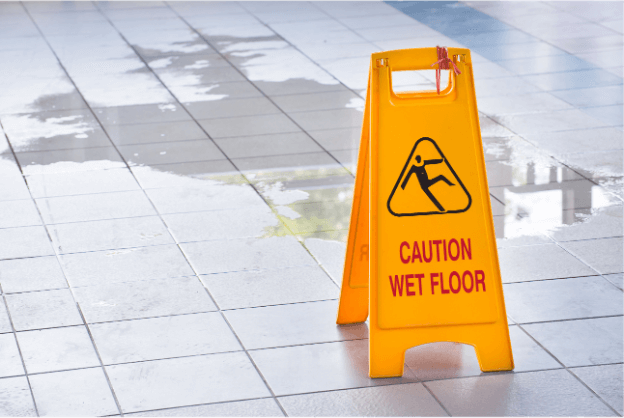
- Post Clear Hazard Alerts: Highly visible signage helps alert employees and visitors to risks such as wet floors, icy pathways, or uneven surfaces.
- Conduct Regular Inspections: Identify hazards like leaks, cracks, or seasonal risks like snow and ice before they lead to accidents.
- Foster Communication Channels: Encourage everyone to report hazards or near-misses through an open, non-punitive system. Signage, mobile apps, or regular meetings can facilitate reporting.
- Leverage Data for Improvement: Analyze incident reports to identify patterns and proactively address recurring issues.
- Promote a Culture of Safety: Provide regular training and reward employees for proactive behavior, reinforcing that safety is everyone’s responsibility.
Building a Safer Future
Preventing slips, trips and falls goes beyond compliance or checklist-based approaches. It’s about creating a culture where personal responsibility, teamwork, and vigilance become second nature. Regular safety audits, investment in technology like slip-resistant flooring, and clear communication are just a few ways organizations can make meaningful strides.
Every step taken toward prevention, not only reduces risk but also demonstrates a commitment to the well-being of employees, customers, and communities. By stepping up this year, you’re paving the way for a safer, healthier 2025–because when safety is prioritized, everyone stands tall.